01 / Shipped game · Windows
A Household Exorcism
Your childhood home is on the market. The ghosts still live there.
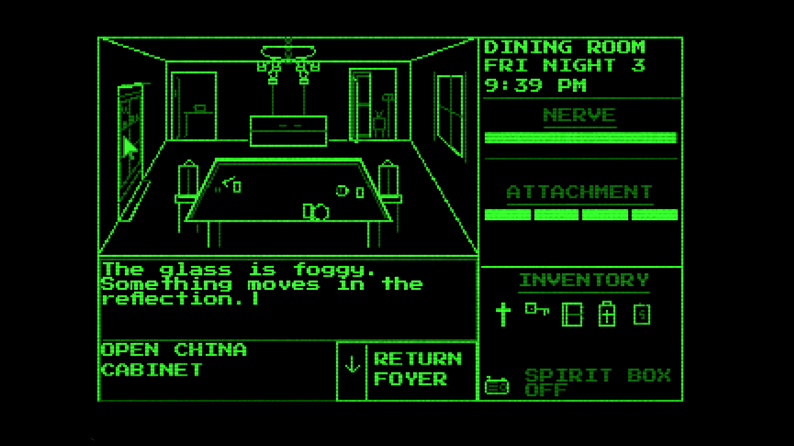
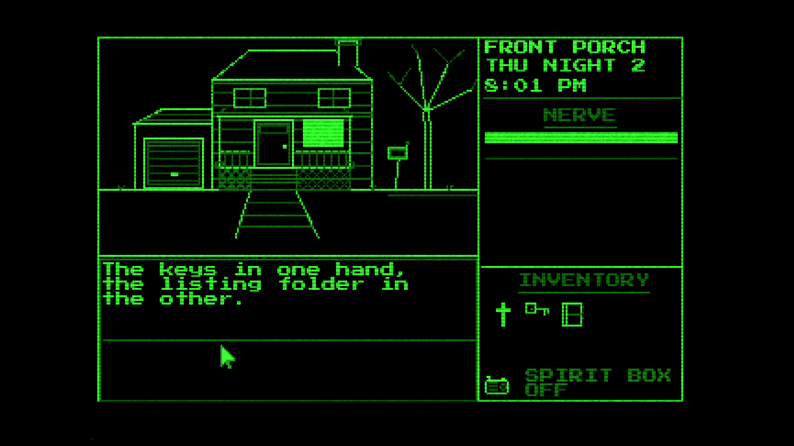
You’re the realtor, with three nights to settle the house before the open house. Explore, listen, and work out what each presence needs.
Watch the trailer
Watch on YouTube ↗A conversation
with the house.
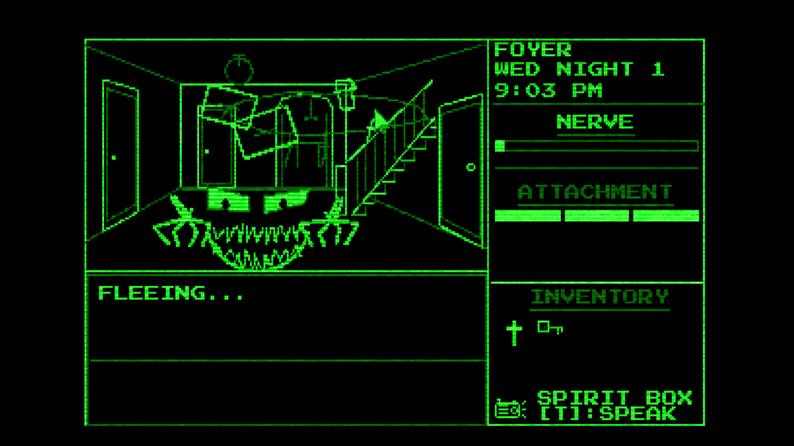
Voice and typed input feed the same offline intent system. Investigate rooms, use what you find, and choose how to address the presence on the other side of the spirit box.
Each night changes the haunting. Time and composure put pressure on your decisions, while the visual language of early microcomputer adventures makes the familiar house feel strange.
- Format
- Single-player adventure
- Interaction
- Voice, text & mouse
- Release
- Windows · September 2026
From implementation
to evidence.
Human direction, agent implementation
The design, atmosphere, pacing, and release decisions remained human responsibilities. Agents supported implementation, iteration, and regression work inside a structured development process.
Test the running game
The project’s player harness sends inputs into a debug build and records screenshots and visible text. Build-bound receipts connect test evidence to the artifact being reviewed. Regression harnesses cover specific behavior; hands-on playtests judge timing, clarity, and feel.
What the process taught
An input being delivered does not prove the game responded correctly. The harness explicitly separates delivery from verification. That distinction, along with isolated runs and independent review, became part of the wider development system.
Explore the Godot development harness →